Device Fingerprinting

Approve logins & transactions invisibly and
prevent website spoofing or mirror phishing fraud
Instant Time to Value
Works right after the first user session

Frictionless UX
Enhances security without compromising the user experience

Zero Trust Support
Helps to reach your Zero Trust security goals by continuously verifying user identities

Compliant with NIS2,
PSD2, and SCA
Graboxy is compliant with NIS2, PSD2, SCA and offers OAuth2 integration.
Graboxy Device Fingerprinting is part of the Graboxy AI Cybersecurity Platform.
Learn more about the other features such as
Remote Desktop Detection, Continuous Authentication, Silent 2FA, CAPTCHA & Bot Detection, and Chrome Extension.
The National Cyber Awards
The Financial Services 2024
Multi-Award-winning cybersecurity platform
built on cutting-edge movement analysis AI by Cursor Insight




Winner of SigWiComp by the German Research Center for AI
Remote Monitoring Security Solution of the Year

Winner of the Mouse Dynamics Challenge Competition of Balabit

BOLD Awards 2024
Boldest Cybersecurity
How It Works

Behavioral Patterns
Patterns of user behavior, such as session duration, and interaction with the service

Geolocation
The physical location of the device based on its IP address or GPS coordinates

Network Information
Data related to the device's IP address, network type, and connection speed

Hardware Configuration
Information about the device's hardware components, such as its processor, graphics card, and memory

User Agent
Information sent by the device's browser or application, which includes details like the device's user agent string, screen resolution, and language settings

Software Settings
Details about the device's operating system, browser version, installed plugins or extensions, and other software configurations
Enhance Your Cybersecurity
Device fingerprinting enhances security measures by providing organizations with valuable insights into the devices accessing their networks or services, enabling them to detect and prevent a wide range of cyber attacks more effectively.

Account Takeover Attacks

Fraudulent Transactions

Credential Stuffing Attacks

Phishing Attacks

Malware Infections

Botnet Attacks
Did You Know?

36% of businesses have experienced a security incident caused by the actions of remote workers.

The average loss of an account takeover fraud is around $12,000 per case.

In the most recent annual report, there has been a rise of over 230% in remote access scams compared to the prior year.
Our Blog

Gait Dynamics & Body Dimension Report Accepted as Evidence by an EU Court
This week, two leading outlets covered a breakthrough for Cursor Insight and for the broader digital forensics community. Forensic Focus published a new interview with our CEO, Tamás Zelczer, on what makes AI-driven forensic technology truly usable in practice. And Biometric Update reported that our computer vision-based gait dynamics + body-structure analysis methodology has been […]
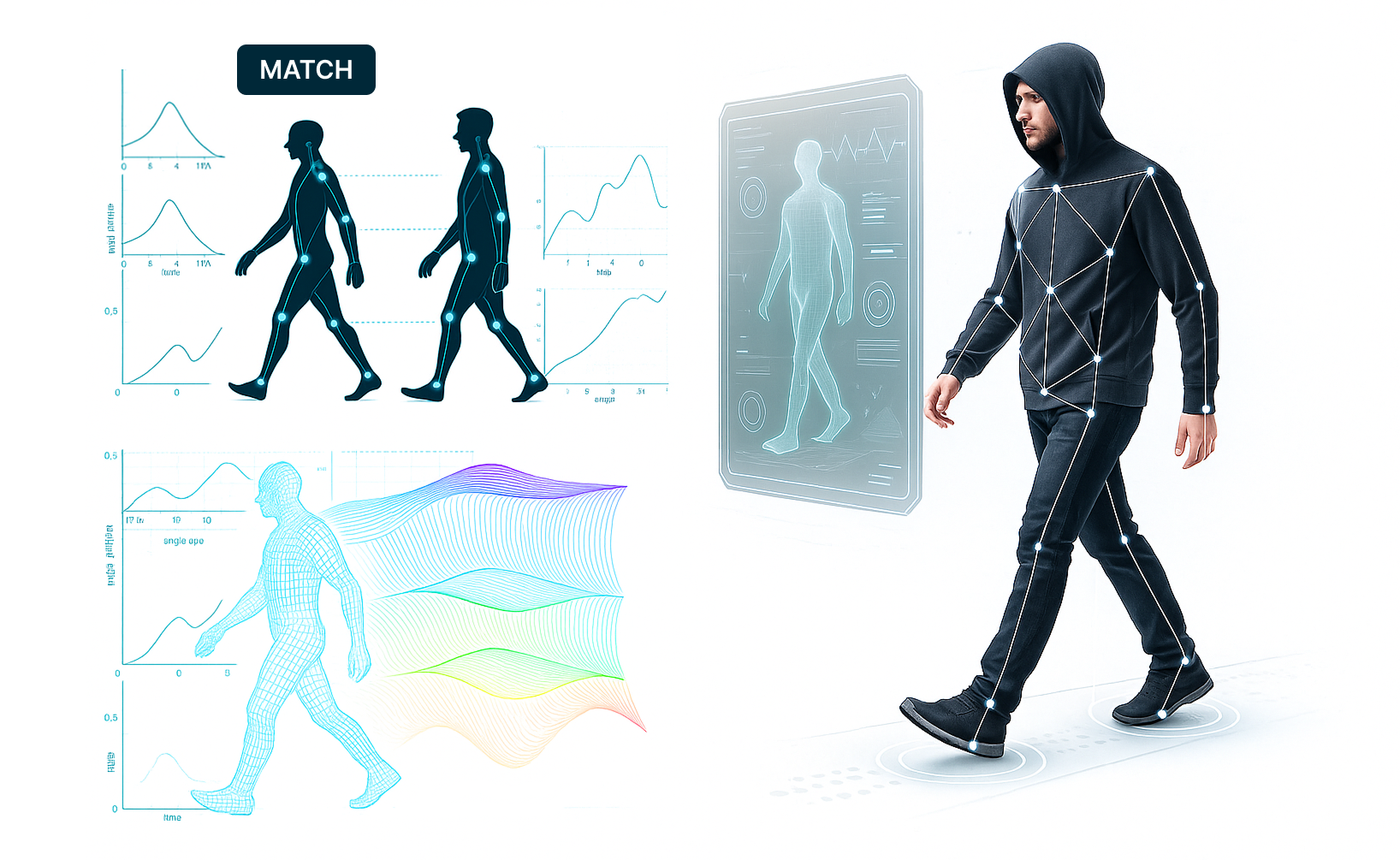
How Accurate Is Walking Recognition? Uncovering the Precision of Our Technology
What we learned from over 90 bodies in motion, thousands of gait cycles, and near-perfect recognition rates At Cursor Insight, we’re passionate about understanding how people move—because movement, it turns out, is one of the most personal things about us. Your gait, the way you walk, is as unique as your fingerprint. And just like […]

Feature screening for ultra-high dimensional, multi-class data
Predictive modelling has become a widely used technique for businesses to gain insights from their data. It is often the case that tens (or even hundreds) of thousands of features are present in the data in question, which can be problematic when training a machine learning model. Feature screening is the process of selecting a small subset of […]
