Remote Desktop Detection
Stop tech support scams, AnyDesk, or
other Remote Desktop Protocol Attacks within 5 seconds
Instant value
Works immediately out of the box with pre-defined AI models.
AI-Driven Scam Detection
Advanced AI analyzes user behavior
and identifies potential scams

Frictionless UX
Enhances security
without compromising the user experience

Zero Trust Support
Helps to reach your Zero Trust goals by continuously verifying user identities
Graboxy Remote Desktop Detection is part of the Graboxy AI Cybersecurity Platform.
Learn more about the other features, such as
Continuous Authentication, Silent 2FA, Device Fingerprinting, CAPTCHA & Bot Detection, and Chrome Extension.
The National Cyber Awards
The Financial Services 2024
Multi-Award-winning cybersecurity platform
built on cutting-edge movement analysis AI by Cursor Insight




Winner of SigWiComp by the German Research Center for AI
Remote Monitoring Security Solution of the Year

Winner of the Mouse Dynamics Challenge Competition of Balabit

BOLD Awards 2024
Boldest Cybersecurity
How Graboxy Protects You From Remote Access Scams
Cursor movements and typing through a remote agent are instantly mirrored on the user’s screen. However, some specific minor inconsistencies in the cursor and typing data, completely undetectable to a human observer, characterize a remote desktop session.
Graboxy's patent-pending technology continuously monitors user interactions and uses AI to analyze data transmitted through the user’s web browser. It is able to identify a remote access session within a few seconds. Such sessions are typically indicative of fraudulent activities in online banking and payment applications.
Graboxy is ready to spot remote access sessions without model training and calibration.
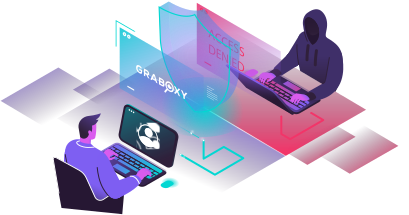
Example Of A Typical Remote Access Scam

1. The victim receives a call from someone claiming to be tech support, alleging issues with the victim's account.

2. The scammer gains trust and creates urgency by scaring the victim with a fake story.

3. The scammer convinces the victim to install a remote desktop application on the device.

4. The hacker takes control of the victim's account and secretly executes fraudulent payments.
Signs of remote access scams

Unsolicited calls or
emails offering tech support

Urgency and pressure tactics
to grant remote access

Unexpected pop-ups
claiming your system is infected
Did you know?
Several terms are used for Remote Access Scams, such as RDP (Remote Desktop Protocol) Attack or RAT (Remote Access Trojan).
It's also called AnyDesk scam, after the most common remote desktop software.

In 2022, the total losses reported to the FBI
from remote access scams
was $806 million in the USA.

In the most recent annual report, there has been a rise of over 230% in remote access scams compared to the prior year.

An estimated 22% of adults in the USA
fell victim to account takeover fraud.
Our Blog

Gait Dynamics & Body Dimension Report Accepted as Evidence by an EU Court
This week, two leading outlets covered a breakthrough for Cursor Insight and for the broader digital forensics community. Forensic Focus published a new interview with our CEO, Tamás Zelczer, on what makes AI-driven forensic technology truly usable in practice. And Biometric Update reported that our computer vision-based gait dynamics + body-structure analysis methodology has been […]
How Accurate Is Walking Recognition? Uncovering the Precision of Our Technology
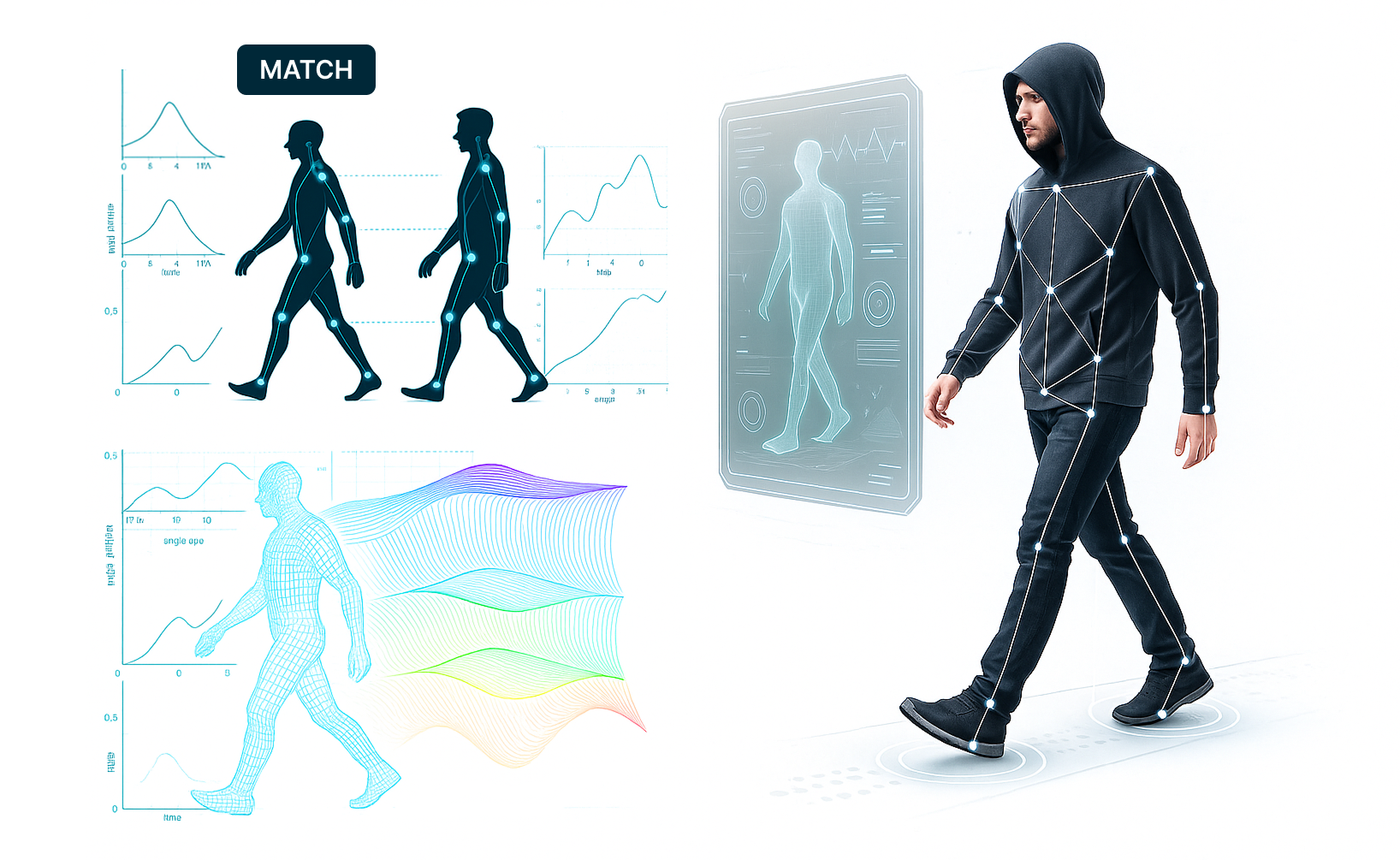
What we learned from over 90 bodies in motion, thousands of gait cycles, and near-perfect recognition rates At Cursor Insight, we’re passionate about understanding how people move—because movement, it turns out, is one of the most personal things about us. Your gait, the way you walk, is as unique as your fingerprint. And just like […]
Feature screening for ultra-high dimensional, multi-class data
Predictive modelling has become a widely used technique for businesses to gain insights from their data. It is often the case that tens (or even hundreds) of thousands of features are present in the data in question, which can be problematic when training a machine learning model. Feature screening is the process of selecting a small subset of […]
